A Lake Park Within an Industrial City
Green spaces in industrial cities are only as viable as the systems that sustain them; the challenge increases in desert environments.
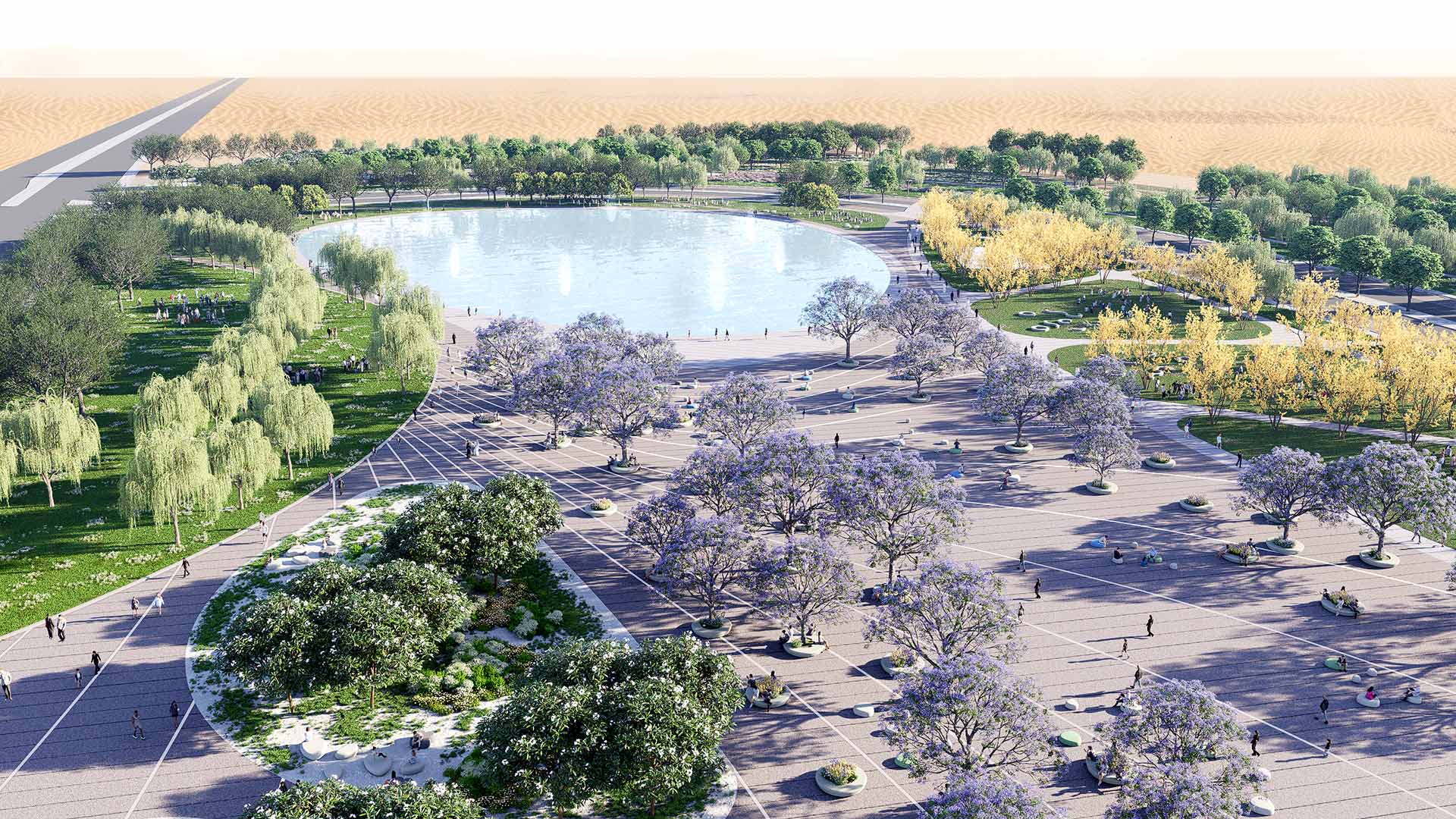
Within Sudair City for Industry and Businesses in Saudi Arabia, Sudair Lake Park is anchored by a sustainable water management strategy that repurposes excess treated sewage effluent (TSE) from the surrounding industrial zone.
This approach aligns with the move toward zero liquid discharge in industrial cities, using treated effluent for ecological value and public open-space needs, rather than releasing it as surplus discharge.
Instead of being discharged or underutilized, reclaimed TSE is collected into two artificial lakes, each with an area of 14,580 square meters, forming both a recreational asset and a functioning water reserve for the wider landscape. The reclaimed water also supports irrigation across the surrounding parkland, enabling a more self-sustaining green infrastructure within an industrial context.
The park sits within a major planned industrial development managed by the Saudi Authority for Industrial Cities and Technology Zones (MODON), providing a dedicated open-space recreational environment within an infrastructure-led setting.
Designing a green public space within an industrial city presents a fundamentally different challenge from creating a conventional park. This project had to respond to environmental exposure, operational constraints, and extensive infrastructure systems, requiring an approach where landscape and engineering were developed together rather than separately.
The commission forms part of MODON’s wider effort to embed public open spaces, landscape systems, and human-scaled environments into industrial cities. These settings are typically shaped by logistics, production, and heavy infrastructure.
Context
Sudair Industrial City is conceived as a long-term economic platform, accommodating manufacturing, logistics, and business operations at metropolitan scale. As the city expands, effective public spaces become increasingly important, not as secondary amenities, but as functional elements of the urban structure.
Within this setting, Sudair Lake Park was planned as an integrated landscape anchor, organizing movement, offering relief from the industrial environment, and introducing outdoor spaces shaped around the two lakes that can be used throughout the day by workers, visitors, and the wider community.
Scope of Work
The scope required close coordination between landscape design and infrastructure systems to ensure the park could be delivered efficiently and maintained over the long term.
Engicon’s appointment covered the full landscape and public-realm package, including:
- Landscape architectural concept development
- Coordination with existing and planned utility networks
- Preparation of drawings through Issue for Tender (IFT)
- Design Basis Reports defining technical parameters and coordination requirements
- Tender and contracting documentation
Key elements were developed in parallel to ensure alignment between public-realm design, utility coordination, and operational requirements. The park scope included:
- Pedestrian walkways, promenades, and footbridges
- Seating areas, picnic zones, and children’s play spaces
- Pergolas, shaded structures, and prayer areas
- Two artificial lakes fed by reclaimed TSE, integrated into the landscape framework
- Irrigation systems, lighting, CCTV, and wayfinding signage
- Stormwater drainage and supporting infrastructure
Design Approach
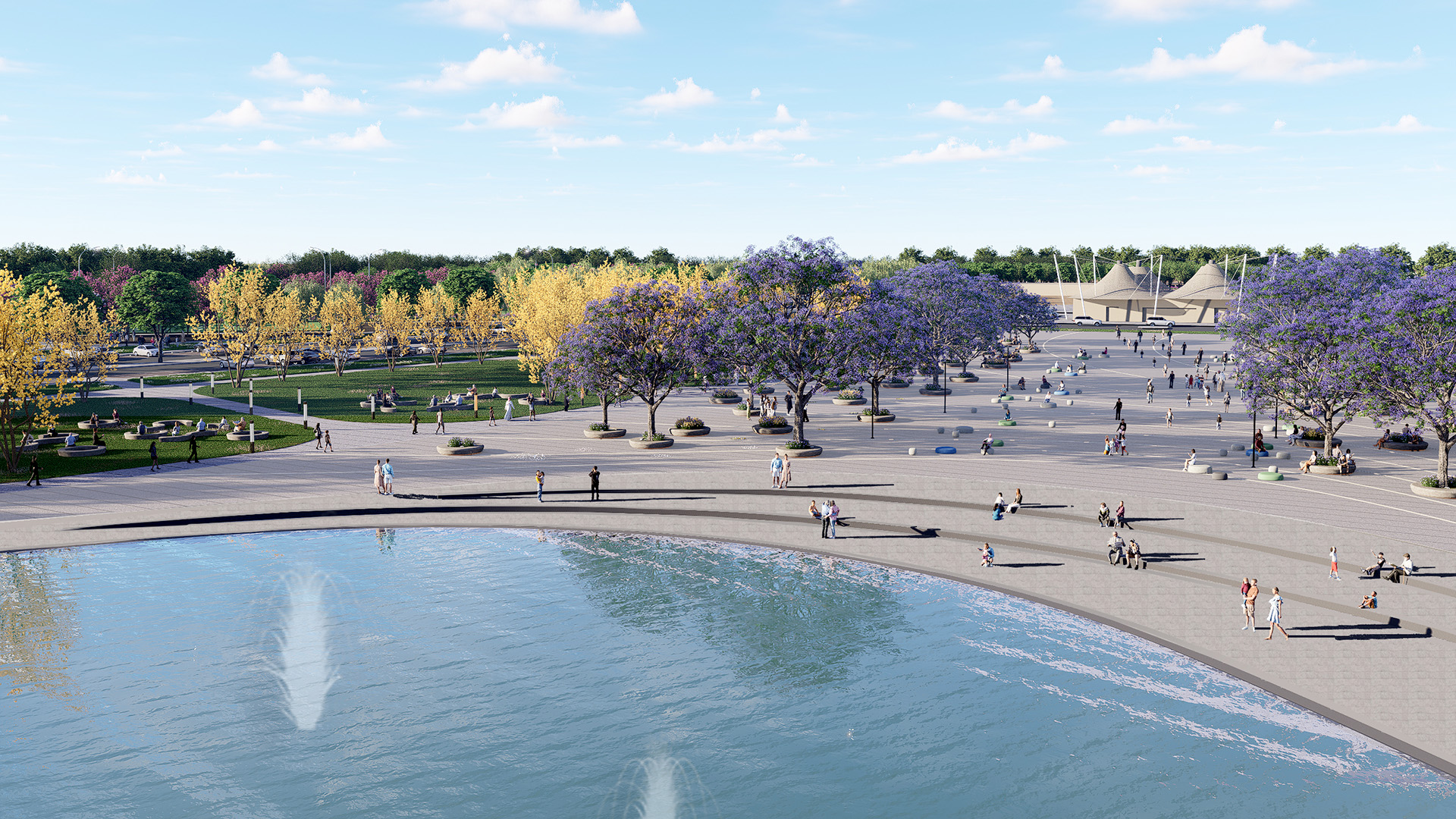
The design approach focused on structuring outdoor space as an accessible component within an operational industrial environment. Circulation routes were treated as primary elements, shaping pedestrian movement through the park. Shaded areas and seating nodes were positioned to support both short stays and longer periods of use.
Water features and planting were used to introduce environmental relief within the industrial setting, while infrastructure systems such as lighting, irrigation, drainage, and security were integrated as functional components of the landscape rather than standalone services.
Technical Delivery
Further to preparing contractor-ready Issue for Tender documentation, Engicon’s role also included translating design intent into coordinated technical packages suitable for procurement.
This required integrating landscape works with utilities and statutory requirements, as well as resolving interfaces between civil infrastructure and public-realm elements, such as irrigation, lighting, drainage, and security systems. The result was a clear tender-ready set of documents that supported accurate pricing, coordinated construction sequencing, and consistent implementation on site.
The Human Element
Sudair Lake Park demonstrates how public landscape can be integrated within an industrial city when design is developed alongside infrastructure and operational requirements.
Industrial developments are increasingly expected to function as complete environments, not only as places of production. Within MODON’s broader drive toward integrated industrial cities, public realm projects such as lake parks help introduce everyday amenities that can serve employees, visitors, and, where applicable, families, supporting a more human-scaled setting inside an infrastructure-led context.
Engicon’s role reflects its experience in delivering public-realm projects where technical coordination and environmental context are central to long-term performance, particularly when ecological intent, utilities, and operational requirements must be reconciled through clear, contractor-ready documentation.