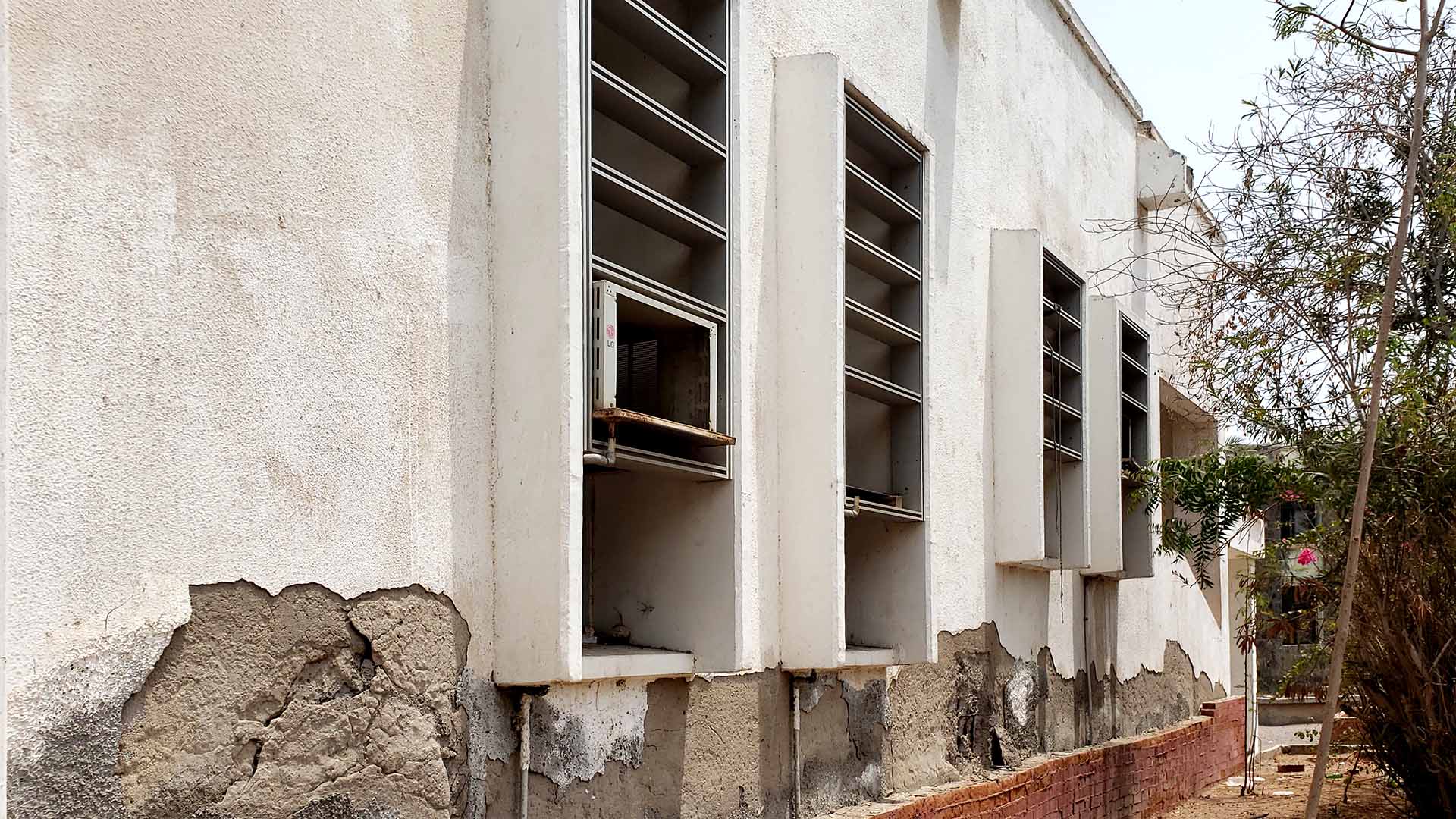
When Yemen's health system began to fracture under the pressures of conflict, disease outbreaks, and economic collapse, some of the country's most essential hospitals found themselves operating far below functional capacity.
The United Nations Office for Project Services (UNOPS), working under the Strengthening the Resilience of Health Systems Project (SRHSP) – Phase III, initiated a rehabilitation program for seven major referral hospitals to re-establish safe and sustainable healthcare access.
Facilities that once served as anchors for community health were suddenly unable to provide consistent care; those included:
- Al-Sadakah Hospital, Aden
- Rosed Hospital, Abyan
- Al-Jamhouri Hospital, Sa'adah
- Dhamar General Hospital, Dhamar
- Al Qayatha General Hospital, Al Maharah
- Al-Jamhouri Hospital – Al Tahreer, Sana'a
- Al-Thawrah Hospital, Sana'a
The infrastructure was deteriorating, equipment was unreliable, and clinical spaces no longer met modern health standards. In parallel, additional Lot 1 facilities were also included in the wider engagement: the newly constructed Sa'ada Hospital in Aden, Radfan Rural Hospital in Lahj, and Dr. Ameen Nasher Higher Institute for Health Sciences in Aden (an academic institute, not a hospital).
To achieve this, UNOPS needed a consultant capable of working inside a country where access disruptions were daily, essential data was often incomplete, and technical progress depended on a deep understanding of local conventions. This is where Engicon became a pivotal orchestrator. A team that understands Yemen's institutional, tribal, and regulatory landscape: the unwritten rules, relationships, and local ways of getting things done.
A New Build with Full Multidisciplinary Design
Among the many facilities included in the program, Al-Sadakah Hospital in Aden required a uniquely comprehensive response. The existing Obstetrics & Gynaecology unit suffered from critical MEP failures, particularly in HVAC and drainage systems. This posed direct risks to patient safety and could not be resolved through ordinary rehabilitation. UNOPS therefore tasked Engicon with delivering a complete new building, designed from the ground up to meet the needs of a modern women’s health facility under Yemen’s operating constraints.
Engicon prepared the full technical package for the hospital, covering Medical Planning, Architectural layouts, Structural design, and fully coordinated MEP systems. This included seismic-compliant structural works, specialized HVAC schemes with controlled pressure regimes and HEPA filtration, plumbing systems aligned with international healthcare guidelines, and an integrated mechanical–electrical service building to support dependable operation. Engicon’s design ensured that the finished facility could function reliably within Aden’s challenging environment.
Capacity For Immediate Mobilization
Engicon has maintained a branch office in Sana'a since 2000, continuing operations throughout the years of conflict. This presence provided Engicon with established local networks of surveyors, laboratories, engineers, and community intermediaries; an operational logistics structure capable of moving teams safely through constrained areas; and ground-level familiarity with the country's institutional, tribal, and regulatory landscape.
This continuity meant that Engicon could begin meaningful work from day one, without the long adaptation period typical for international firms entering conflict-affected regions.
Understanding the Human Stakes
Engicon’s work was to stabilize essential health services for populations who had few alternatives. Hospitals selected by UNOPS serve large catchment areas, some up to 800 beds, others functioning as the only referral facility for surrounding districts.
Engicon's mandate focused on rehabilitating the core life-saving departments, including obstetrics, nephrology, operating theatres, intensive care units (ICUs), supporting service areas, and critical infrastructure upgrades (medical gases, generators, water systems).
Assessment in a Data-Poor Environment
One of the defining challenges of the project was the absence of reliable, updated information. Drawings were outdated or missing, building conditions varied sharply between departments, and prior modifications were undocumented.
Engicon deployed a hybrid team structure; this included international specialists working alongside Yemeni engineers and surveyors. They conducted full technical assessments of each hospital, including Al Qayatha (Al Maharah), Al-Sadakah (Aden), Rosed (Abyan), Al-Jamhouri (Sana'a), Al-Jamhouri (Sa'adah), Dhamar General Hospital (Dhamar), and Al-Thawrah (Sana'a).
These assessments included structural integrity checks, architectural and functional assessments, MEP audits covering HVAC, firefighting, drainage, and medical gases, environmental impact verification, and space programming analysis.
The teams documented conditions with great care, often combining traditional engineering survey methods with contextual knowledge provided by hospital administrators, technicians, and local authorities. This allowed Engicon to paint a reliable picture of each facility, despite the fragmented baseline data.
Designing for Real-World Constraints
The design methodology balanced international healthcare standards with Yemen's operational realities. Engicon's team produced functional layouts aligned with clinical workflows, circulation diagrams that improved patient, staff, and equipment movement, 3D visualizations to support stakeholder understanding, structural and geotechnical recommendations for both rehabilitation and new construction, fully coordinated MEP systems tailored to local material availability, and medical equipment BOQs and specifications categorized for practical procurement.
The designs also accounted for intermittent energy supply, water scarcity, and limited spare-part availability, ensuring that final solutions could be operated and maintained locally.
Risk Management Grounded in Local Knowledge
Engicon's operations in Yemen required a pragmatic approach to safety. Longstanding presence meant that risk mitigation was based on experience, not assumptions.
Measures included using vetted drivers and heavy-terrain vehicles, GPS-tracked travel plans, avoiding night movement, UXO awareness protocols, community engagement to reduce tension at project sites, and low-profile field presence to avoid drawing unwanted attention.
Because Engicon's local teams were embedded in the community landscape, they could preempt potential obstacles that could significantly cause delays and hamper project continuity.
Stakeholder Engagement
A defining characteristic of Engicon's approach was its emphasis on direct engagement with hospital staff and administrators. Through structured workshops and on-site sessions, the team gathered insights on patient flow problems, service delivery bottlenecks, equipment placement needs, priorities for future expansion, and day-to-day operational challenges.
Many of our design decisions that included the placement of emergency entries, recovery areas, ICU nursing stations, or dialysis access points, were shaped by such firsthand operational knowledge.
As a result, the designs reflected not only compliant facilities but also functional working environments tailored to how Yemeni medical teams actually deliver care.
Work That Extended Beyond Design
Engicon's scope included design support during implementation, enabling the team to clarify technical queries from contractors, adjust drawings when unforeseen conditions emerged, and provide alternative solutions without compromising design intent.
This ensured that engineering quality remained consistent from concept to execution, a critical requirement when rehabilitating functioning hospitals that cannot simply shut down during construction.
Engicon's role in Yemen has always been defined by reliability: our ability to deliver engineering services in difficult environments while maintaining quality, as well as translating complex clinical needs into feasible solutions.
Through this project, Engicon helped restore the operational backbone of multiple key hospitals; including those in Aden, Abyan, Sa'adah, Dhamar, Al Maharah, and Sana’a; as well as Radfan Rural Hospital, Sa'ada Hospital in Aden, and the Dr. Ameen Nasher Institute. Our work helped restore vital clinical services for hundreds of thousands of Yemenis and reinforced national initiatives aimed at stabilizing a strained health system.